A middle schooler in Frankfurt watches a film about water and fundraises to build a well in Uganda. A teenager in Kuwait watches a film about a deaf girl and launches a global coding platform for neurodiverse learners. Students in Japan watch a film about refugees and start writing letters. Not because they were assigned to. Because a film made them feel they had no other choice.
SIMA Academy was built on a straightforward conviction: impact-driven documentary film is among the most powerful educational tools ever created, and most classrooms have never encountered it. Over the past decade, SIMA Studios has worked to close that gap, placing films curated from its global collection into schools, universities, and community spaces across more than 140 countries, paired with educator resources designed to turn a screening into a starting point.
What follows is drawn from verified impact stories submitted by educators and student leaders who’ve used SIMA’s platform across 42 countries. They represent a methodology that works.
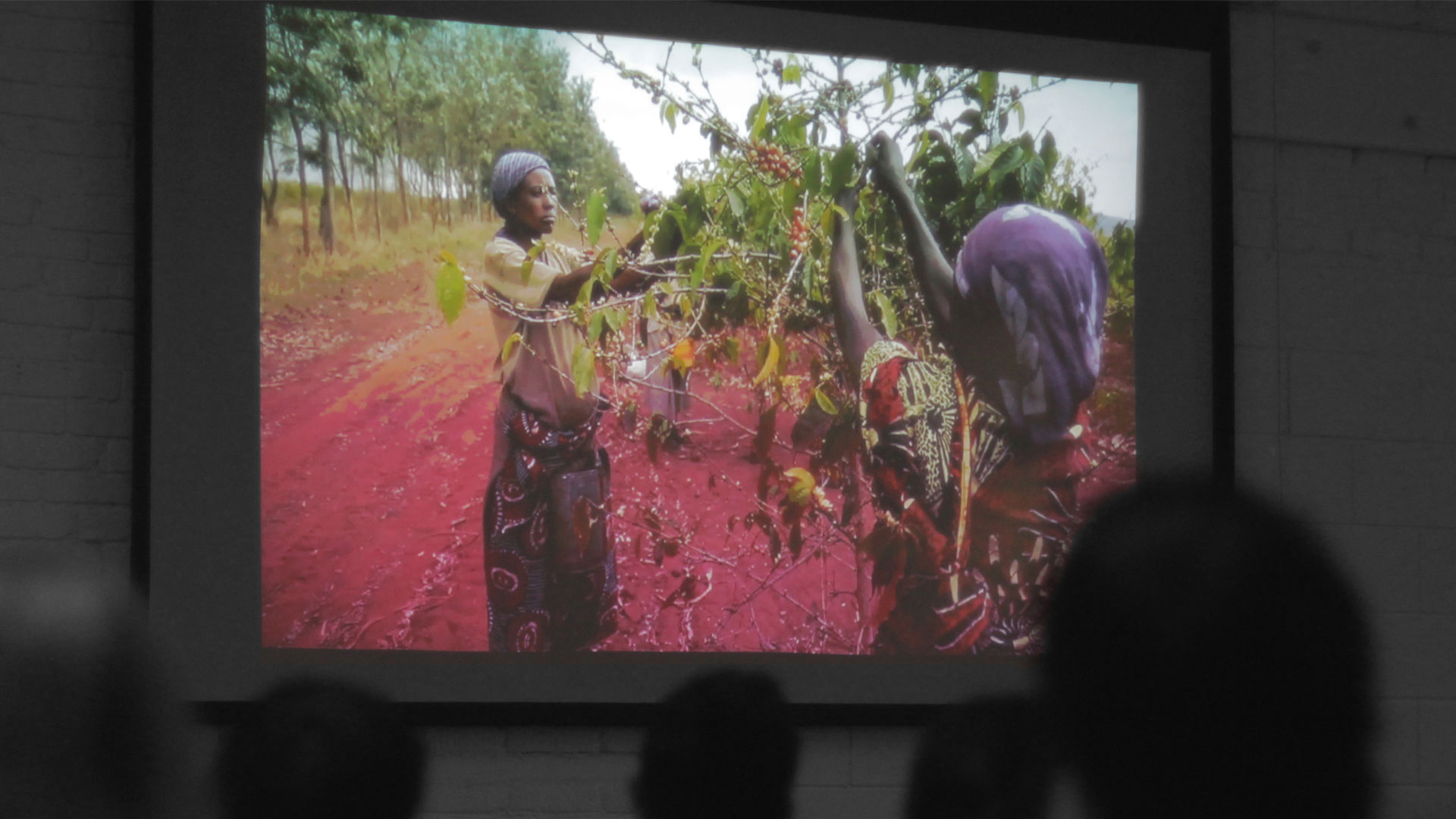
When students watch a film together, they talk differently than they do after a lecture. The shared experience of a documentary, its specific faces, its unscripted moments, its moral weight — creates a commons. A room of individuals becomes a room of people who have seen the same thing and need to reckon with it.
An educator in India described how SIMA films helped students develop a “real-world lens” — not abstract awareness, but an encounter with actual people navigating poverty, climate disruption, and inequality. In Pakistan, students who watched a screening on climate resilience didn’t just discuss it. They organized one. A university professor in the Philippines reported that after a screening, her students stopped describing themselves as future professionals preparing for careers. They described themselves as people who needed to do something.
Twamsen Danaan, a filmmaker and educator in Nigeria who screened Kayayo, From Gangs to Gardens, and What About Our Future? with his students, put it plainly: “My students learned so much about how they are part of the world and what it means to be connected to everyone everywhere through their shared humanity.”
A student built a coding platform for neurodiverse learners. In Kuwait, Akhil Konduri watched Vibrations, a film about a young deaf girl that challenges how we perceive ability, and launched DiversiCode, a student-led global initiative creating accessible STEM education for students with ADHD and learning differences. “Differently wired doesn’t mean less capable — just different,” she wrote. She was 17.
A teacher in Pakistan wove gender and climate together. Syeda Munazza Bukhari, an educator in Islamabad, screened First Period: A Film on Green Schools as part of her Dream2Rise project for young girls. The film, about children taking eco-friendly action beyond the classroom, gave her students a framework to connect gender equity, climate confidence, and access to quality education. “The films deepened our understanding of gender barriers, climate challenges, and the power of youth-led action.”
Elementary students launched a letter campaign for refugees. In Hiroshima, Japan, Tiffany Key screened The Fledging to teach SDG 16 on peacebuilding. Her elementary students were moved enough to write a letter campaign in support of refugees. “My students greet me every class now with the question: ‘Are we learning more about SDGs today?’”
A Frankfurt middle schooler funded a well in Uganda. Finley Johnston, a middle school student at Frankfurt International School, watched Water is Life and launched “The FN&N Project”, a fundraiser to provide clean water and sanitation to Kiswa Village in Uganda. The project funded the construction of a well serving over 800 households. One film. One student. Eight hundred families with clean water. “To change people’s perspective on water and water waste,” Finley wrote, “we have to change the opinion they have on the environment.”
Period poverty, named and confronted. In Kampala, Uganda, Nantume Masturah watched What About Our Future? and Brighter and launched a fundraising and awareness campaign around period poverty. Her framing was unsparing: “In my village, period poverty has been identified as a significant cause of girls missing school, leading to early marriage, teen pregnancy, and school dropouts.” She didn’t describe the problem as distant. She described it as her village.
In Yobe State, Nigeria, Saeed Muhammad Lawan turned a film into a movement. Inspired by What About Our Future?, he created “Growing Together: Trees and Dreams”, combining poetry, environmental education, and community mobilization into a region-wide tree planting initiative. “Climate change is more than just an environmental issue,” he wrote. “It is a serious threat to our lives.”
A Sri Lankan teacher became a trainer, and her students recycled 10,000 pens. Udeshika, an English language and literature teacher, screened E-Wasteland, Women in Fukushima, and Kayayo with her students. What followed was “Pens for a Greener Future”, a student-led initiative that collected and recycled over 10,000 pens, planted trees, and supported local entrepreneurship. The experience also shifted Udeshika’s own practice. She now trains other educators to integrate SIMA films into their teaching. “They came up with really practical solutions to the problem, and they had the motivation to overcome it.”
A film about child labor, screened a few miles from where it happened. In Ghana, elementary school teacher Joseph Archibald Whadji screened Kayayo, a film about family-enforced child labor set in a market in Accra, to 300 students at a school just down the road from that same market. The film’s proximity to their own lives made the conversation impossible to abstract away.
A screening in Burundi sparked a new institution. Leonidas Nzigamasabo, a student at Light University in Burundi, screened Kayayo for over 250 fellow students alongside a panel of local experts on entrepreneurship and SDG 1, ending poverty. By the end of the evening, students had decided to form an Entrepreneurial Club to support young people starting businesses. A film about a child carrying loads in Ghana sparked a club that outlasted the night.
A social enterprise launched in India. Gaurjan Sharma, a student in Chandigarh, watched The Happiness Shop, about a Vietnam-based social enterprise employing women with disabilities, and As for Us, and launched her own impact initiative. “Creating ReBrew taught me that impact requires both creativity and structure.” She went on to win the 2025 SIMA Student Changemaker Award.
These stories share a shape. An educator decides a short documentary film is worth the class time. Students watch something they didn’t expect. A conversation starts that goes beyond the lesson plan. And then something happens — an advocacy project, a personal pivot, a campaign, a question that doesn’t close when the bell rings.
That shape isn’t accidental. It’s the result of SIMA’s curatorial logic: films selected not only for quality but for what they activate. The platform gives educators the context to know what they’re introducing into a room and the framework to let students lead what comes next.
What emerges covers nearly every terrain: climate, gender equity, mental health, indigenous knowledge, food systems, clean water, labor rights, civic courage. Not as separate programs, but as the same methodology landing in different rooms, with different films, meaning something every time.
Something quieter also runs through these stories: what happens to the educators. Teachers describe rethinking their curricula after watching what their students do. Several became advocates, running screenings across departments, partnering with NGOs, training colleagues. The platform doesn’t just change students. It changes what it means to teach.
The reach extends further still. In South Africa, a screening on water justice fed directly into policy-level discussions on water and sanitation. At the UNDP, a SIMA-supported screening brought institutions, youth leaders, and policymakers into the same room around the SDGs — not a typical outcome for a film program.
In Morocco, educator Maroua Ameziane screened 16/6 about the 2010 Haiti earthquake — and the conversation it opened on displacement and responsibility outlasted the room. “Film is a powerful tool for social change,” she wrote, “because it is a form of proof.” It doesn’t argue. It shows.
None of this was prescribed. SIMA Academy doesn’t mandate outcomes. It creates conditions. The outcomes emerge because the films are doing something real.
Rajvi Trivedi, an educator at Christ University in Bengaluru, said it plainly: “Films can do what textbooks cannot do.”
Novaira Khan, a student in Karachi who screened What Would It Look Like? for her community, got there from the other direction: “In a world dominated by visual media, film is an excellent tool for changing hearts and minds and creating awareness.”
You can’t lecture someone into caring about a problem they’ve never encountered. Film introduces students to lives they won’t live, places they may never visit, and stakes they might otherwise never feel. Done well, it doesn’t inform — it implicates.
SIMA Academy has spent fifteen years building the infrastructure for that to keep happening: a curated library of the world’s most powerful impact documentaries, educator resources designed to turn a screening into a starting point, and a network now spanning 140+ countries. The results from this cohort alone — 10,000+ pens recycled, 200+ trees planted, 800+ households with access to clean water, new clubs and enterprises launched across continents — are what that infrastructure looks like when it works.
Each one started with a film and a room full of people who hadn’t yet decided what to do about it.
SIMA Academy provides educators and institutions with access to award-winning impact documentaries and the resources to activate them.